Planet Zoo 2 African Elephant: Space, Matriarchs and Conservation
The complete Planet Zoo 2 African elephant guide: herd space, matriarch social needs, mud wallows, barrier grades and why this Endangered giant is worth it.
Quick answer: The African savannah elephant in Planet Zoo 2 is the largest land animal in the game — bulls stand over 3 m and weigh up to 6,900 kg — and it demands matching infrastructure: a minimum of 502 m² of land, 56 m² of shelter, 25 m² of water, and Grade 4 barriers at 3 m height. Socially, keep females in bonded herds under an older matriarch and house mature bulls separately, because dominant males in musth do not mix safely. The species is Endangered, and its 22-month pregnancies make every calf a genuine event.
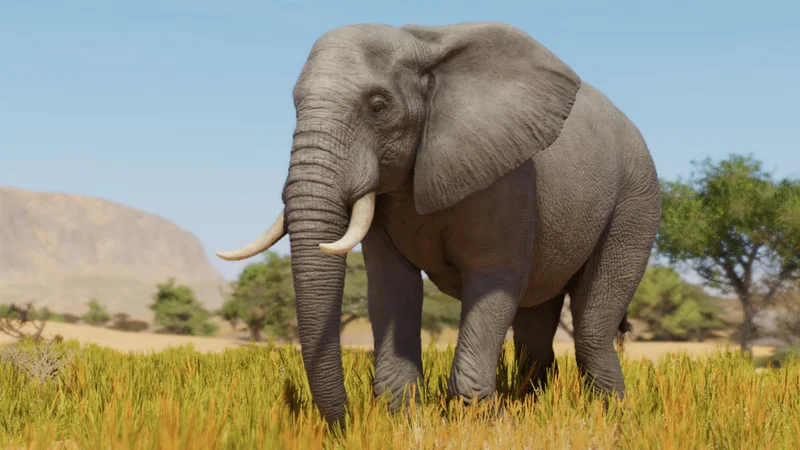
Why the Largest Land Animal Redefines “Big”
Everything about the African savannah elephant (Loxodonta africana) is a scale problem, and the official Zoopedia numbers make that concrete. Bulls reach 3.04–3.36 m at the shoulder and 5,200–6,900 kg; even cows, at up to 3,500 kg, outweigh every other land animal on the launch roster. Both sexes carry tusks that grow throughout life — an adult male’s can add 7 cm per year — and in the wild these animals walk up to 80 kilometres a day. That single fact should shape your whole exhibit philosophy: an elephant habitat is not an enclosure, it is a managed landscape.
The practical consequences cascade. Food expense is listed at $1,322 per period, the highest tier on the savannah roster, and the terrain recipe is unusually broad: grass, sand, soil, rock and waterlogged ground all within tolerance. Water is mandatory rather than decorative — 25 m² of aquatic area for bathing and drinking. For help budgeting around that appetite, our money-making guide covers revenue exhibits that pair well with expensive anchor species. New players should read how the beginner guide sequences unlocks before committing to elephants early.
Matriarchs, Herds and Bachelor Pods
The Zoopedia calls the species social “with the exception of mature males who usually live alone,” and that split is your management model. Female groups of 2–16 are led by a matriarch — an older female whose experience guides movement and foraging — and the game tracks a stable dominant female within the herd. Female bonds last for life; even herds that split up recognise and greet family members later. Elephants are even recorded grieving at a group member’s death, a detail Frontier chose to include verbatim in the lifecycle notes, which tells you how seriously welfare simulation takes these bonds.
Males follow a different track. Young bulls leave the family herd around eight years old to form bachelor pods, and male dominance within those pods shifts with age and aggression — a hint that housing two bull elephants together is a temporary arrangement, not a permanent one. When a bull enters musth, the periodic state of heightened testosterone, fertility and aggression described in the Zoopedia, he is a different animal from the one you housed last month. The safest community practice at launch is a bull-only habitat sized for eventual separation, though exact musth behaviour triggers and durations are still under community testing.
Habitat Design for a Megaherbivore
Minimum space is 502 m² of land plus a 56 m² shelter, under Grade 4 barriers — one grade stronger than lions or giraffes require — and a temperature band of 14°C to 36°C. That shelter footprint is the real tell: elephants need a substantial indoor holding, and skimping on it will show up in welfare.
Enrichment is where elephant keeping becomes joyful. The food list includes hanging and large barrel feeders, a fixed roller feeder, melon feeders, a veggie jelly cake, a tree scatter feeder and a suspended high grazer feeder; habitat items run from the gyro, skittle and large ball to the rubbing pillar, large tire, musical keyboard and, critically, the mud bath. Wild elephants spray water and soil over their backs as sunscreen, and the Zoopedia bakes that behaviour into the item list. Build the mud bath beside the water so the full wallow sequence can play out. Our dedicated habitat design guide goes deeper on sightline and backstage layout for large mammals.
Elephants are also ecosystem engineers: the Zoopedia flags them as terrestrial seed dispersers, and their dung spreads the seeds of the trees they browse. In mixed-species terms they are neutral neighbours with the Masai giraffe and the black rhinoceros — a natural savannah triad worth planning around, even though no species is listed as a thriving partner for them.
One Game, Two Elephants: Telling Them Apart
A point of confusion worth clearing up early: the savannah elephant is the African representative in Planet Zoo 2, distinct from the Asian elephant species in both size and silhouette. The African animal is taller at the shoulder, carries larger ears shaped roughly like the continent itself, and both sexes bear visible tusks. The Zoopedia confirms the grassland, desert and wetlands biomes for this species, reflecting its real flexibility from savannah to mountain. When browsing the all-animals list, check the scientific name — Loxodonta africana — to be sure you are reading the right page.
An Endangered Anchor for Your Zoo
The IUCN classifies the African savannah elephant as Endangered, and the Zoopedia does not soften the story: poaching for ivory, habitat loss to human expansion, retaliatory conflict over crop damage, and even poisoned carcasses set to kill the vultures that would otherwise reveal poaching sites. Continental census counts continue to trend downward despite national park protection, and the Zoopedia states plainly that the population is still in decline despite conservation efforts.
That is precisely why this species matters in a zoo simulation. Every elephant exhibit in Planet Zoo 2 is wired with conservation-education topics — human-wildlife conflict, poaching, habitat fragmentation — that turn guest attention into donations in the game’s economy. Breeding is deliberately slow: one calf after a 22-month gestation, an interbirth period of 108 months, maturity at 10 years. A newborn elephant is a multi-year achievement, not a quarterly one, and an albino colourmorph exists for dedicated breeding programmes. If your zoo has the space and the budget, this is the exhibit that defines it.
Related Articles
animals
Planet Zoo 2 Giraffe: Height, High Feeders and a Silent Decline
Planet Zoo 2 giraffe guide: Masai vs Reticulated differences, high feeders, barrier quirks and why the tallest land animal is quietly vanishing.
animals
Planet Zoo 2 African Wild Dog: Pack AI and Social Needs Guide
Planet Zoo 2 African wild dog guide: pack hunting behaviour, social group management, and how to release painted wolves to the Great Rift Valley reserve.
animals
Planet Zoo 2 Animals: Complete List of All 130 Species
Every Planet Zoo 2 animal at launch: all 130 species grouped by class with real-world conservation status, plus the new aquatics and flying birds explained.
Was this helpful?
Thanks for the feedback!