Planet Zoo 2 Lion: Pride Management and Great Rift Valley Releases
How to keep lions in Planet Zoo 2: pride sizes, male vs female roles, habitat needs, enrichment and Great Rift Valley releases for this Vulnerable big cat.
Quick answer: The lion in Planet Zoo 2 is a grassland predator built around pride life, not solitary keeping. According to the official Zoopedia, mixed groups of 2 to 30 work, with one dominant male (occasionally a coalition) presiding over related females, and every habitat needs at least 810 m² of land plus a small 10 m² shelter. Males and females split the workload exactly as they do in the wild — lionesses do around 90% of the hunting while males defend territory — and the game’s dominance system reflects that division. Lions are listed as Vulnerable, and they are a flagship release candidate for the Great Rift Valley Reserve.
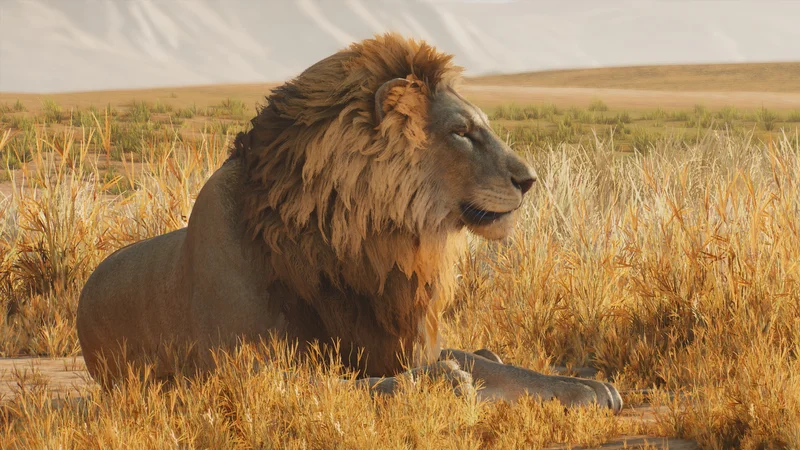
How Pride Structure Shapes Lion Keeping in Planet Zoo 2
Most cats in zoo games are solitary puzzles. The lion is the opposite: a social animal whose welfare lives and dies on group composition. Frontier’s Zoopedia describes the wild pride as several related females and their young, plus a dominant male and one or two subordinate males — and the game models this closely, with preferred ranges of 2–5 males and 2–30 females, and female hierarchy based on age rather than brute force.
In practice, this changes how you plan a lion exhibit from day one. A lone lion on a pedestal looks wrong here, and more importantly it plays wrong. You want a stable core of sisters and their cubs, one adult male, and a plan for where surplus males go — because they will come. Young male offspring are pushed out of the pride in the game just as in nature, so bachelor housing (or a second pride waiting for its king) is not optional infrastructure, it is core infrastructure. Our habitat design guide covers how to stage backup habitats behind the scenes without breaking your guests’ sightlines.
Male and Female Roles: Designing Around the Division of Labour
The Zoopedia is unusually explicit about lion biology: females hunt, males patrol, and the two sexes use space differently. Lionesses are sleek, mane-less and agile; the male’s mane is both armour and billboard. In game terms that means your habitat should serve two behaviour budgets at once — stalking cover and sightlines for the females, and elevated vantage points where a male can survey his territory.
Enrichment follows the same split. Food-based items listed for lions include the Bamboo Feeder, Frozen Blood Pumpkin, Piñata Zebra, Piñata Pronghorn and Restraint Feeder, while habitat enrichment runs to prey-scented sacks, rubbing pads, scratching posts and small balls. Scatter the scent and rubbing items along patrol routes to anchor the male’s circuit, and place puzzle feeders in open ground so the “hunt” happens where guests can watch. Whether exact enrichment efficacy values stack or overlap, specific figures are still under community testing, but the behavioural logic is straight from the official fact sheet.
The Numbers Behind a Working Lion Habitat
The official Zoopedia minimums are manageable for a mid-size zoo: 810 m² of land, a 10 m² shelter, Grade 3 barrier strength at 3 m height, and a temperature band of 14°C to 41°C. Terrain calls for 20–90% grass, 10–80% soil, up to 60% sand and small tolerances for rock and waterlogged ground — an easy match for a dry savannah flat. Lions are listed with a “Confident” temperament and periodic food expenses of $1,262, making them a mid-tier carnivore to feed: far cheaper than the great bears per animal, pricier than the small cats.
Breeding is straightforward — the Zoopedia rates reproduction “Easy”, with litters of 1–3 cubs after roughly 3.5 months of gestation, sexual maturity at 3 years and a 32-month interbirth period. Plan for a nursery area away from the main pride: lionesses introduce cubs to the pride at six to eight weeks old, so a quiet den corner away from guest noise is the in-game equivalent. And remember the dark side of pride turnover — when a new male takes over, rival males kill cubs that are not theirs. If you are managing bloodlines carefully, time male rotations deliberately. Colourmorphs available at launch include a leucistic variant and a darker variation for players chasing breeding programmes.
Releasing Lions into the Great Rift Valley Reserve
One of the headline additions of Planet Zoo 2 is sending animals back to the wild through wildlife reserves, and the lion is a marquee candidate. The Zoopedia confirms two valid release destinations — the Great Rift Valley Reserve and the Tanzania Reserve — and accepts three release group types: a mixed pride, a male bachelor group or a female bachelor group. That flexibility matters, because it means the surplus males your pride inevitably produces are not a dead end; a bachelor coalition release is a legitimate, lore-friendly outcome.
Release requirements frame lions as a “Medium Prey” role in their ecosystems, which tells you how the food web simulation treats them. If reserve mode is your endgame, our Great Rift Valley Reserve breakdown explains how the savannah food web fits together, and the beginner guide walks through unlocking conservation play early enough to matter. For the full launch roster, see our all-animals list.
Conservation: The Vulnerable King
The IUCN lists the lion (Panthera leo) as Vulnerable, with an estimated 22,000–25,000 wild individuals — down from hundreds of thousands a century ago. Habitat fragmentation, retaliatory killing for livestock predation, poaching and shrinking prey base are the compounding pressures Frontier’s conservation notes highlight, alongside the community-based programs and wildlife corridors fighting back. Keeping a pride in your zoo is not just a display exercise: the game’s conservation-education framing, from fact sheets to talk points, turns your pride into an ambassador exhibit. If you want a contrasting pack-hunting carnivore to pair with it thematically, the African wild dog faces its own very different conservation battle. One Zoopedia fact is worth printing on every lion sign in your zoo: a male’s roar carries eight kilometres, and so should his story.
Related Articles
animals
Planet Zoo 2 African Wild Dog: Pack AI and Social Needs Guide
Planet Zoo 2 African wild dog guide: pack hunting behaviour, social group management, and how to release painted wolves to the Great Rift Valley reserve.
animals
Planet Zoo 2 Hippo: Semi-Aquatic Habitat Design Guide
Planet Zoo 2 hippo guide: official Zoopedia stats, semi-aquatic habitat design, land-water ratios, territorial behaviour and Vulnerable conservation status.
animals
Planet Zoo 2 Giant Panda: Conservation, Breeding and FEN Economics
Planet Zoo 2 giant panda guide: official Zoopedia stats, why this Vulnerable bear anchors the Fauna & Ecosystems Network conservation economy.
Was this helpful?
Thanks for the feedback!