Planet Zoo 2 Clown Anemonefish Guide: Anemone Symbiosis and Reef Tank Care
Planet Zoo 2 clownfish guide: pair them with a host sea anemone, keep 1 to 5 fish in 50 m² of saltwater at 24-28°C, and breed a dominant pair the easy way.
Quick answer: The Planet Zoo 2 clownfish — officially the clown anemonefish (Amphiprion ocellaris) — is a tiny Least Concern reef fish whose whole life orbits one partner: its host sea anemone. The official Zoopedia calls for 50 m² of deep saltwater held between 24°C and 28°C, a planned group of one to five fish, and a working grasp of the species’ hierarchy, where a dominant breeding pair commands a band of smaller, non-breeding males. Every individual is born male, and the dominant male changes sex if the female dies — which is exactly why breeding the Planet Zoo 2 clownfish is rated Easy once its anemone is in place.
Why does the clown anemonefish live inside a stinging anemone?
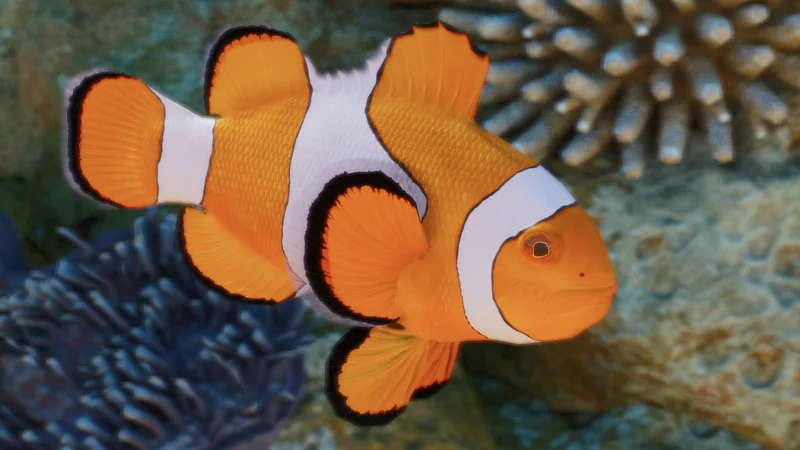
Sea anemones sting almost everything that brushes them, yet the clown anemonefish weaves through the tentacles unharmed. The Zoopedia frames the bond as mutualism: the fish receives shelter and protection from predators among the stinging tentacles, while the anemone gets a dedicated cleaner and bodyguard that drives off intruders — often fish many times its own size. Planet Zoo 2 treats that biology as a keeping requirement rather than trivia, because the species’ welfare, hierarchy and breeding all key off the anemone. In the wild the partnership is the fish’s address, nursery and fortress in one, and the game’s habitat logic mirrors that: build the exhibit around the anemone, and place it where guests can watch the fish dart between tentacles, because in Planet Zoo 2 the symbiosis itself is the show. Planet Zoo 2 also hands you the science for free exhibit boards: the Zoopedia’s mutualism framing explains why the fish survives the sting, and guests who read it tend to stay at the glass longer. That is the gap between a filler tank and a Planet Zoo 2 exhibit that teaches.
How does the clownfish hierarchy work in a Planet Zoo 2 tank?
According to the Zoopedia, clown anemonefish form small, structured groups with a strict dominance order: a dominant breeding pair on top and non-breeding subordinates below, all dependent on close social contact for stability. The mechanism is protandrous hermaphroditism — every clown anemonefish is born male, and when the resident female dies, the dominant male transitions to female while the largest subordinate steps up as the new breeding male. Growth and breeding rights follow rank, so the social ladder decides who reproduces. The fish even negotiate their disputes: the fact sheet records popping and clicking sounds used in territorial arguments. For keepers, a stable group of up to five is self-sorting — lose a dominant female and the tank re-orders itself through the life cycle instead of collapsing, which is a genuinely elegant bit of simulation in Planet Zoo 2. Once the anemone, the water and the group size are right, Planet Zoo 2 asks for almost no day-to-day micromanagement from you.
What habitat numbers does the clown anemonefish need?
The official minimums are gentle, which is why the Planet Zoo 2 clownfish works as an entry-level aquarium species: 50 m² of deep water area, a saltwater environment held at 24-28°C, and a planned population of one to five adults in a mixed group. Temperament is listed as Neutral, periodic food expense is $120 — among the cheapest animals in Planet Zoo 2 to run — and the only listed food-based enrichment is the Aquatic Feeder with flakes. No barrier grade is listed for this species, matching how the small reef fish of Planet Zoo 2 live inside rated aquarium systems rather than behind habitat fencing. Water chemistry targets beyond temperature and salinity have not been officially published; specific figures are still under community testing. In the meantime, treat temperature as the dial that matters: nudge your aquarium climate control so the tank never drifts outside the 24-28°C band, and Planet Zoo 2 keeps the fish firmly in its comfort zone. For construction and sightline advice that carries across every tank in your zoo, see our habitat design guide and the dedicated aquatic animals guide.
Which species mix safely with clown anemonefish?
The Zoopedia lists no thriving partners for this species, but twelve neutral tank mates — including the yellow tang, the palette surgeonfish, schooling bannerfish, longfin batfish and bluespine unicornfish. In practice, Planet Zoo 2 is nudging you to build a Pacific reef community rather than a single-species bowl: the fish on that neutral list are the exact cast of a classic coral-reef wall. Pair the clown anemonefish with a drifting group of yellow tang for grazing action on the upper reef, add palette surgeonfish for open-water laps, and let the anemone sit low as the anchor of the composition. One caution: larger predators such as the blacktip reef shark are a different build entirely — sharks need their own rated tanks — so keep this community exhibit strictly to the neutral list. Read that list as Planet Zoo 2’s own shopping list for a first reef: every name on it is a safe, harmonious addition to the same water, which strips most of the risk out of stocking a brand-new aquarium building.
How do clown anemonefish breed, and why does conservation matter?
The breeding loop is short and satisfying. The female lays hundreds of adhesive eggs on a flat surface beside the host anemone, and the male guards and fans them until they hatch — usually within six to ten days. The larvae then drift planktonically for one to two weeks before settling onto a reef and searching for an anemone of their own, reaching sexual maturity between one and two years old. The Zoopedia rates reproduction Easy with a three-month interbirth period, so a settled pair will steadily replenish your Planet Zoo 2 reef. Conservation-wise the species is Least Concern but not carefree: anemone loss, coral bleaching and collection for the aquarium trade all pressure wild populations, while marine protected areas and captive-bred sourcing do the repair work. Keeping the species in Planet Zoo 2 — and telling its anemone story through exhibit talk points — makes a small ambassador tank with a real message. For the rest of the launch roster, browse our all-animals list.
Related Articles
animals
Planet Zoo 2 Hammerhead Shark Guide: The Great Hammerhead's Sixth Sense
Planet Zoo 2 hammerhead shark guide: the Deluxe great hammerhead needs 960 m², Grade 3 barriers and a solitary life as a Critically Endangered giant.
animals
Planet Zoo 2 Leopard Shark Guide: Deep Dives and Nocturnal Life
Planet Zoo 2 leopard shark guide: the zebra shark dives to 200 ft, rests by buccal pumping, lays huge eggs and needs just 36 m² and a Grade 2 barrier.
animals
Planet Zoo 2 Blue Tang Guide: The Real Fish Behind a Famous Cartoon
Planet Zoo 2 blue tang guide: the palette surgeonfish behind the famous cartoon fish needs 50 m² of saltwater at 23-28°C and breeds easily once settled.
Was this helpful?
Thanks for the feedback!